
What is Elon Musk's net worth?
MoneyWeek · May 5, 2023
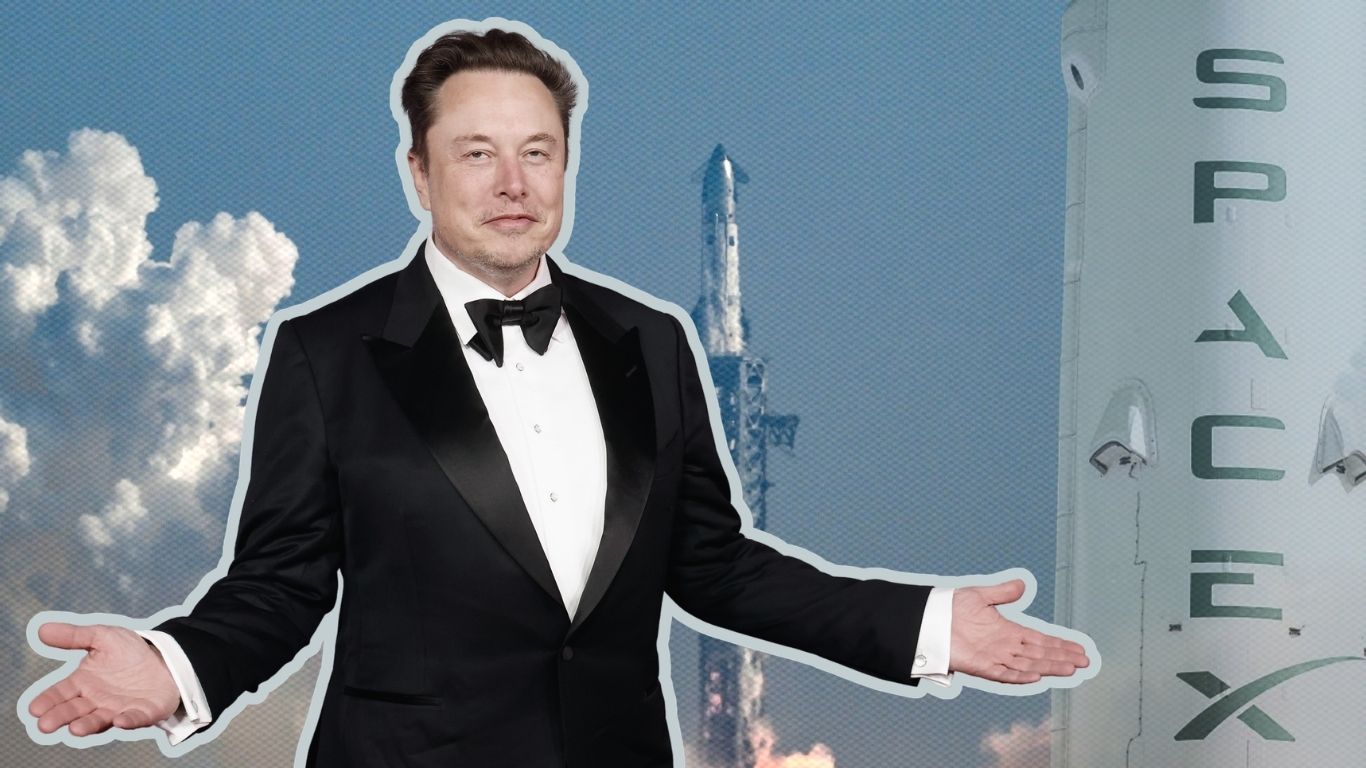
Auto-translated from English. Article & images courtesy of the source — we recommend reading the full original.
Elon Musk is now the world’s first-ever trillionaire after SpaceX’s record-breaking stock market debut. We take a look at his stratospheric wealth over the years.
When you purchase through links on our site, we may earn an affiliate commission. Here’s how it works.
Elon Musk is now not only the richest person in the world but also the first and only trillionaire in history.
After SpaceX’s highly anticipated IPO on 12 June, Forbes reported that Musk added $188 billion to his already astronomical wealth. It means that his net worth is now more than that of the four billionaires after him on the Forbes Real Time Billionaires List.
But where exactly did it all start, and how did the South African tycoon add 12 zeroes to his net worth?
Get unparalleled financial insight, analysis and expert opinion you can profit from.
Don't miss the latest investment and personal finances news, market analysis, plus money-saving tips with our free twice-daily newsletter
We chart how his wealth has grown from his early years of founding what is now PayPal, joining Tesla, and launching SpaceX.
At the time of writing, Elon Musk’s net worth is $1.3 trillion, according to Forbes.
To put that into perspective, Sarah Coles of AJ Bell says: “If you aimed for a trillion pounds and you were starting from scratch, you could put away £500 a month and, with growth at 5% a year and contributions rising 2% a year, it would take around 316 years.”
Musk’s net worth has grown substantially over the past few years, driven largely by his stakes in electric vehicle company Tesla and aerospace firm SpaceX.
He first appeared on Forbes’s World’s Billionaires list in 2012, when he had an estimated fortune of $2 billion, making him the world’s 634th richest person. From then on, it took Musk less than a decade to take the top spot, dethroning Amazon CEO Jeff Bezos as the world’s richest person in January 2021.
Musk was born in South Africa on 28 June 1971. From an early age, he showed an interest in technology and innovation.
His first major success came with Zip2, a company that provided online business directories and maps to newsletters. In 1999, Compaq acquired Zip2 for nearly $300 million, paving the way for Musk into the tech industry.
Musk used proceeds from the sale to launch X.com, an online payment platform that eventually evolved into PayPal. In 2002, eBay acquired PayPal for $1.5 billion. That same year, Musk used $100 million of his own fortune to start SpaceX, aiming to make space exploration more accessible and colonise Mars.
In 2004, Musk joined Tesla Motors and became the company’s CEO four years later. Under his leadership, Tesla emerged as one of the world’s most electric vehicle companies, with a market capitalisation of over $1.12 trillion.
Musk also co-founded solar panel installation firm SolarCity, neurotechnology company Neuralink and tunnel construction firm The Boring Company.
SpaceX’s meteoric rise to become the world’s largest-ever initial public offering can be attributed to Elon Musk’s larger-than-life public persona, widening interest in investing in space, and rising AI spending by tech megacaps.
On 12 June, shares in the AI and space company began trading on the Nasdaq at $150 per share, raising $75 billion and closing with a market cap of $2.11 trillion.
It makes SpaceX one of the world’s most valuable companies, reaching the milestone in an extremely short timespan.
Elon Musk’s influence extends far beyond the tech world. He was a prominent supporter of Donald Trump during the 2024 US presidential election, spending over $290 million to get Trump into the White House, according to CNN.
Following Trump’s victory over Democratic nominee Kamala Harris, Musk secured a position in his administration, serving as the leader of the Department of Government Efficiency (DOGE).
DOGE emerged as a means to cut US government spending, which resulted in mass workforce layoffs and controversial cuts to USAID, which is responsible for foreign aid and humanitarian relief. On 28 May 2025, Musk departed from the role to focus on Tesla.
Musk has built up a vast property empire over the years. In 2020, he stated on X that he would sell all his “physical possessions” and “own no house”. At that time, the asking prices for his seven homes were more than $100 million in total, according to Architectural Digest, including a 16,000-square-foot home in Los Angeles, which sold for $29 million.
After shedding his property portfolio, Musk moved into a tiny home in Boca Chica, Texas, close to the SpaceX headquarters. In 2022, he bought a 6,900-square-foot mansion in West Lake Hills, Texas, worth $6 million.
The billionaire has also built his own company town called Starbase, named after his rocket launch site, on the southern tip of Texas. The city covers around 1.6 square miles and is home to some 500 people, according to The Guardian.
The Tesla CEO has a large collection of cars, ranging from a Ford Model T, a 1997 McLaren F1, a Tesla Roadster and the 1976 Lotus Espirit that James Bond drove in the 1977 film The Spy Who Loved Me. Musk bought it at an auction in 2013 for nearly $1 million, according to the BBC. He also owns private jets, each worth millions of dollars.
With so many billions to his name, it’s not surprising that Elon Musk has a wealth manager. His fortunes are handled by Excession LLC, a single-family office formed in 2016. It’s run by James Birchall, Musk’s trusted advisor and CEO of Neuralink.
While Musk doesn’t donate his wealth as generously as other billionaires like Bill Gates, Jeff Bezos and Mark Zuckerberg, he still gives away billions in shares to charities. He has an organisation called the Musk Foundation, with more than $14 billion in assets. However, The New York Times reported that the charity failed to give away the minimum amount required by law for the fourth year in a row.
Get the latest financial news, insights and expert analysis from our award-winning MoneyWeek team, to help you understand what really matters when it comes to your finances.
Disclosure & disclaimer: All information, scores, signals and trade plans on this site are produced by an automated algorithmic system and are based on technical and quantitative data only. They do not constitute investment advice, investment marketing or a recommendation to act, and are not a substitute for personal advice from a licensed professional that accounts for your needs and circumstances. We are not investment advisors. Trading securities involves substantial risk, up to the loss of your entire investment; every decision and action is your sole responsibility. i-trade and its operators bear no liability for any direct or indirect damage arising from reliance on this information.